

What Is a Cylindrical Fuse? A Cornerstone of Electrical Circuit Protection
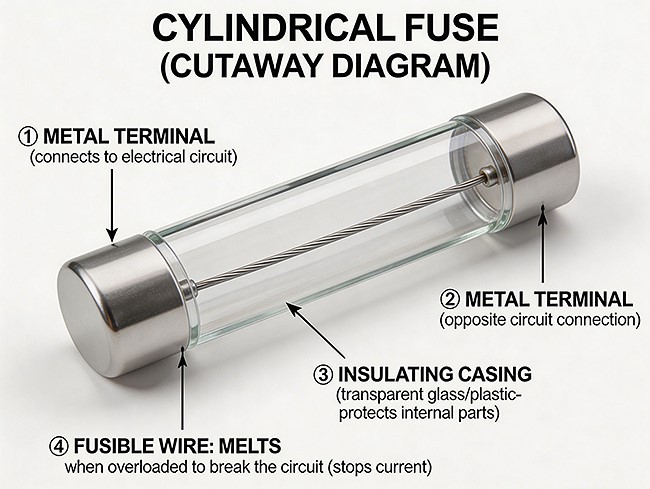
In the global electrical and electronics industry, the cylindrical fuse is a ubiquitous, reliable, cost-effective overcurrent protection component, underpinning safety across countless commercial and industrial applications.
A cylindrical fuse is a passive, single-use protective device housed in a rigid cylindrical insulating body-typically glass or high-grade ceramic-fitted with conductive metal end caps. Its core is a precisely calibrated metallic fuse link, often surrounded by quartz sand arc-quenching filler for high-breaking-capacity models.
Operating on Joule's heating principle, the fuse link melts instantaneously when circuit current exceeds its rated threshold, triggered by overload, short circuit, or component failure. This irreversible action cleanly breaks the circuit, isolating faults to prevent catastrophic equipment damage, electrical fires, and electric shock risks.
Classified under IEC 60127, IEC 60269 and UL 248 standards, cylindrical fuses fit diverse use cases: glass-body variants dominate low-voltage consumer electronics, household appliances and small power supplies, while ceramic-body models serve high-demand industrial automation, automotive electronics, solar PV, energy storage and telecom infrastructure.
Amid the global boom in renewable energy and electric mobility, demand for high-performance cylindrical fuses continues to rise, with manufacturers innovating miniaturized, higher-voltage, RoHS-compliant designs. Even with advanced protection technologies, the cylindrical fuse remains an irreplaceable safety foundation, valued for its simplicity, predictable performance and universal industry standardization.